

When you need to keep chickens in, protect a vegetable garden, or create a simple enclosure for small animals, chicken wire is often one of the first fencing materials that comes to mind. It is lightweight, flexible and relatively easy to work with, which makes it useful for both farms and household projects.
But buying chicken wire is not simply a matter of choosing a roll and getting started. Mesh openings vary, wire thicknesses differ, and you can choose between traditional metal mesh and newer plastic alternatives. The right product for a chicken run may not be the right one for protecting seedlings or enclosing chicks.
This guide explains the main types of chicken wire mesh, the sizes available, where each type works best, and what to check before you buy.
What Is Chicken Wire?
Chicken wire is a lightweight mesh made by twisting or weaving thin wires together, traditionally into a hexagonal pattern. Most metal versions are made from steel and are galvanized to improve their resistance to corrosion.
Despite its name, chicken wire is useful for much more than poultry. Farmers use it for chicken coops, chick enclosures and garden fencing, while homeowners often use it for small animal runs, temporary barriers and DIY projects.
Its flexibility is one of its biggest advantages. You can cut it to size, bend it around corners and attach it to timber or metal frames without needing heavy fencing equipment.
The important part is choosing a mesh with an opening and strength appropriate for the job.
Chicken Wire, Chicken Mesh and Chicken Wire Mesh: What’s the Difference?
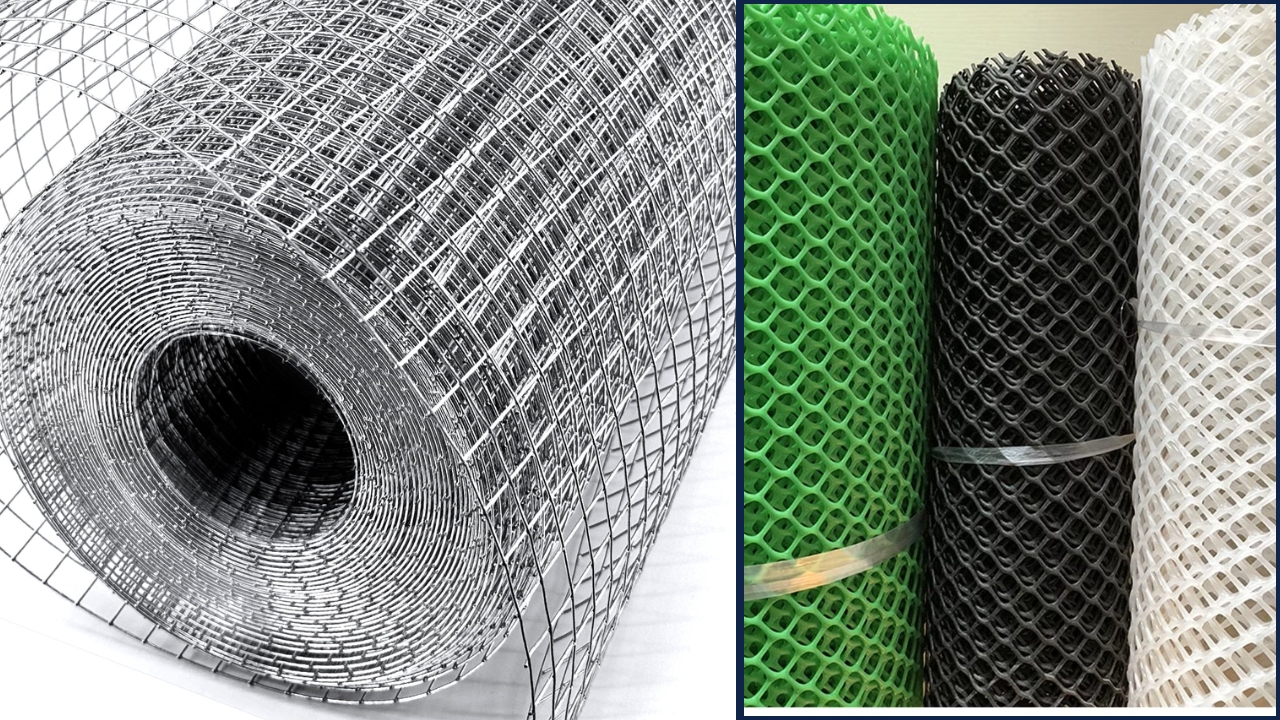
You will often see the terms chicken wire, chicken mesh and chicken wire mesh used interchangeably.
For most buyers, they describe essentially the same type of lightweight mesh fencing. The terminology can vary between suppliers, but the specifications are what really matter.
A roll labelled chicken wire could have a different opening size or wire thickness from another product carrying the same name. Before buying, check the actual dimensions rather than relying on the product name alone.
The main specifications to compare are:
- Mesh opening
- Wire diameter or gauge
- Roll height
- Roll length
- Material
- Protective coating
- Intended application
These details determine whether the mesh is suitable for chicks, adult chickens, gardens or a more demanding enclosure.
Chicken Wire Mesh Sizes
Mesh size is particularly important when you’re building a poultry enclosure. A gap that works perfectly well for adult chickens may be too large for young chicks.
Common chicken wire mesh openings include 13 mm, 19 mm, 25 mm and 50 mm, although other sizes are available.
13 mm Chicken Wire
A 13 mm opening, roughly half an inch, provides a relatively fine mesh. It is useful for chicks, small birds and situations where you want to reduce the size of gaps in an enclosure.
The smaller openings also make it more difficult for small animals to pass through.
19 mm Chicken Wire
Around 19 mm, or three-quarters of an inch, offers a useful middle ground for poultry and some small-animal applications.
It can be a good option when a finer mesh is needed without going all the way down to the smallest openings.
25 mm Chicken Wire
A 25 mm, or 1-inch, opening is a common choice for general poultry applications. It allows good ventilation while providing adequate containment for many adult chickens.
This size can also be useful around gardens and for general farm projects.
50 mm Chicken Wire
A 50 mm, or 2-inch, opening provides a more open mesh. It can work for adult poultry and general fencing applications where containing very small birds is not a concern.
For chicks, however, a smaller opening is usually the safer choice.
Wire Thickness Matters Too
Mesh opening is only part of the specification. The thickness of the wire affects how well the fence stands up to handling, pressure and outdoor conditions.
You may find chicken wire described using either wire gauge or wire diameter. If possible, check the diameter in millimetres when comparing products, since gauge numbering can be confusing between different systems.
A fine, lightweight mesh may be perfectly adequate for a temporary garden barrier. A permanent poultry enclosure that is likely to experience more physical contact may benefit from a heavier wire.
There is no advantage in paying for the heaviest mesh available if your application doesn’t require it. At the same time, saving money on an overly thin product can mean replacing the fence sooner than expected.
Galvanized Chicken Wire
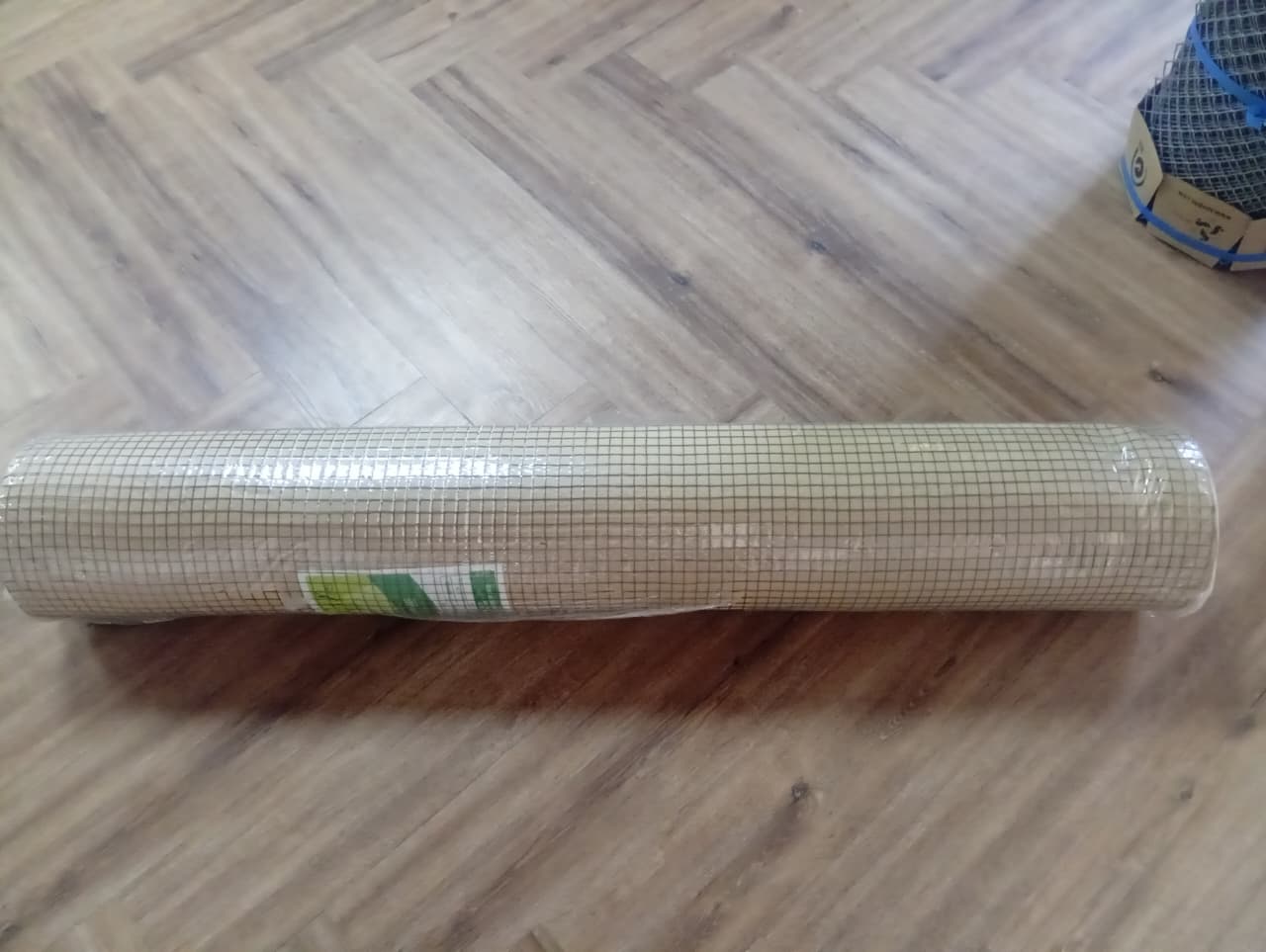
Galvanized steel is one of the most common materials used to manufacture chicken wire.
The steel is coated with zinc, which helps protect it from moisture and corrosion. This makes galvanized chicken wire mesh suitable for many outdoor applications, including poultry houses, chicken runs, gardens and farm fencing.
The quality and longevity of galvanized wire depend on more than the word “galvanized” on the label. Wire thickness, coating quality, installation and the environment all play a role.
This is especially worth considering in areas exposed to high humidity or salty air. Coastal environments can be harder on metal fencing, so choosing good-quality galvanized mesh and avoiding unnecessary contact with standing water or soil can help extend its useful life.
Galvanized wire is corrosion-resistant, but it should not be treated as completely rust-proof.
Plastic Chicken Wire: When Does It Make Sense?
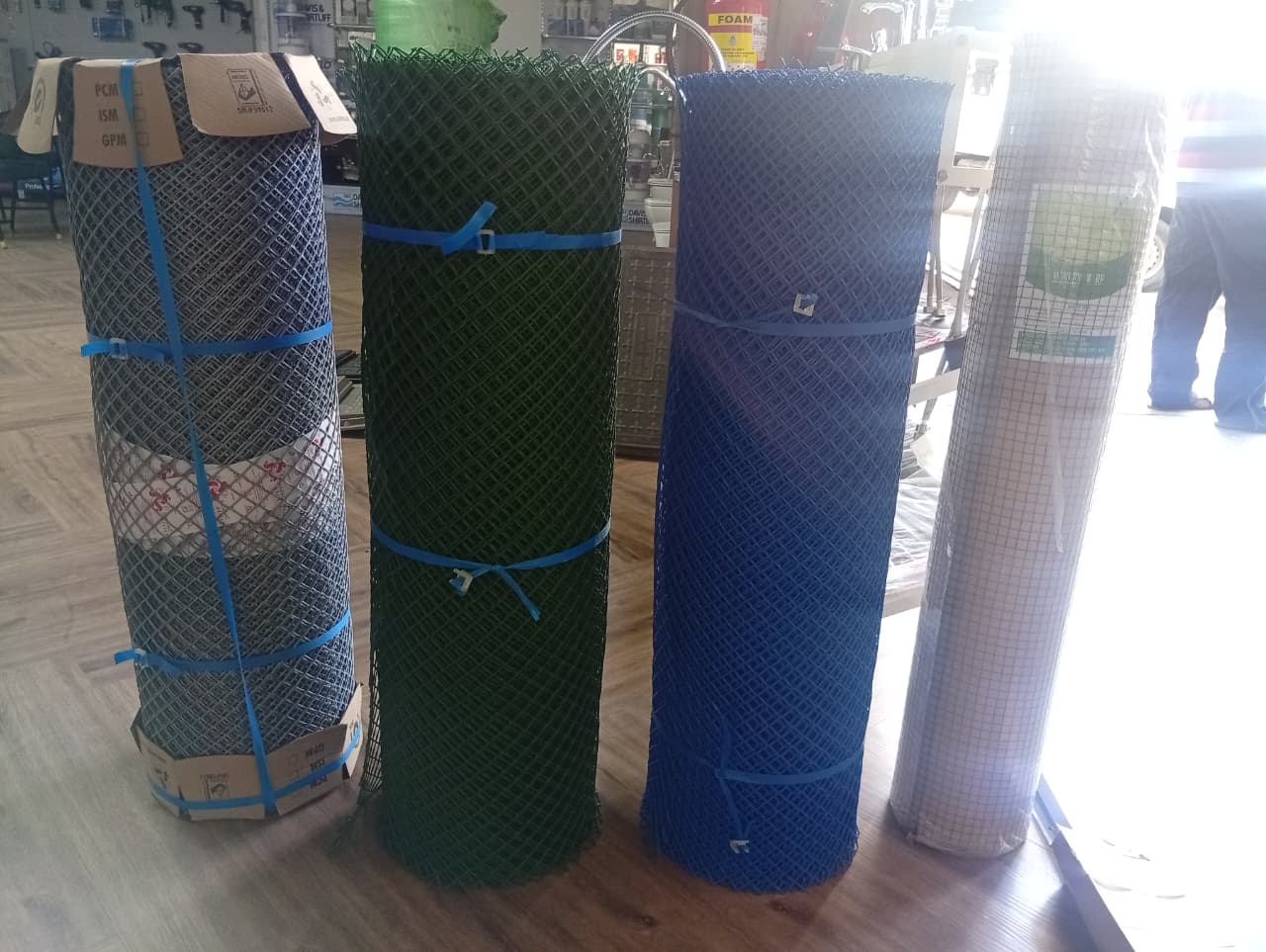
Plastic chicken wire provides a lightweight alternative to steel mesh. It is made from polymer material rather than metal, so corrosion is not an issue.
That makes plastic mesh particularly convenient for temporary enclosures, gardens and lightweight poultry applications.
For example, you might use it to separate chicks from adult birds, protect vegetables from chickens, create a temporary enclosure or surround a group of seedlings.
Plastic mesh is also easy to transport and handle. You don’t have to deal with sharp steel wires when cutting it, and moving the fencing from one location to another is relatively simple.
There is, however, an important consideration: UV resistance.
Plastic that is left in direct sunlight for long periods can become brittle if it is not designed for outdoor exposure. If you are buying plastic mesh for a permanent outdoor installation, check that it is UV-resistant and intended for that environment.
Plastic Chicken Wire or Metal Chicken Wire?
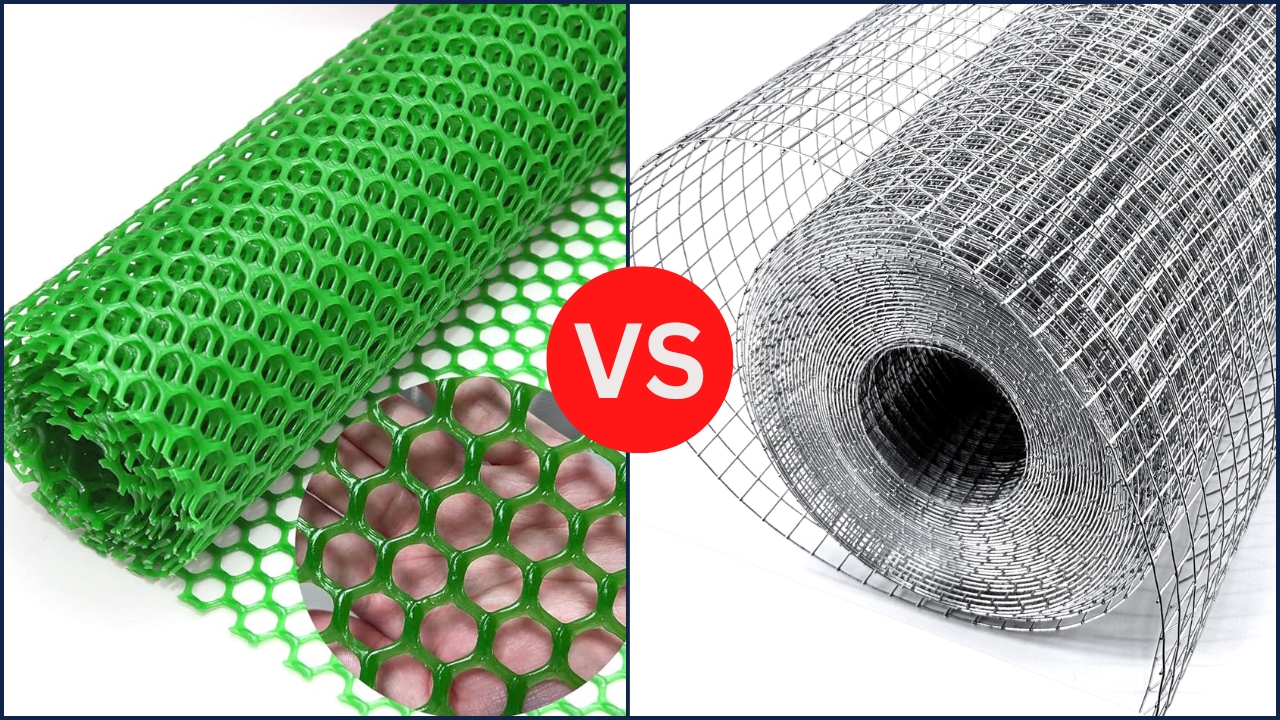
The better option depends on what you expect the mesh to do.
Metal chicken wire generally has the advantage when physical strength and long-term outdoor use are important. A good galvanized product can withstand handling and everyday farm use while providing a reliable enclosure.
Plastic mesh has a different set of advantages. It is lighter, doesn’t rust and is convenient when you need a temporary or easily movable barrier.
| Feature | Metal Chicken Wire | Plastic Chicken Wire |
|---|---|---|
| Material | Steel | Plastic/polymer |
| Rust resistance | Galvanized versions resist corrosion | Does not rust |
| Weight | Relatively lightweight | Very lightweight |
| Flexibility | Flexible | Highly flexible |
| Cutting | Wire cutters required | Generally easier to cut |
| Physical strength | Generally stronger | Depends on product |
| UV exposure | Not applicable | UV resistance should be checked |
| Temporary fencing | Suitable | Very suitable |
| Permanent fencing | Suitable with the right product | Depends on product quality |
| Heavy-duty applications | More appropriate | Usually not recommended |
For a permanent chicken house, galvanized wire is often the more practical choice. For a temporary garden enclosure, plastic mesh may be all you need.
Choosing Chicken Wire for a Chicken Coop
A chicken coop needs more than a mesh covering. The fencing has to work as part of the entire structure.
Start by considering the size of the birds. If you’re raising chicks, use a finer mesh that prevents them from squeezing through openings. Adult chickens can generally be accommodated with larger openings.
You should also think about predators.
Traditional chicken wire is good at keeping poultry contained, but it isn’t a heavy-duty security product. Dogs and other determined animals can damage lightweight wire, while some predators may be able to work their way through or underneath it.
If predator protection is a major concern, consider using stronger welded wire mesh in vulnerable sections of the enclosure. You can still use chicken wire where a finer or more flexible barrier is useful.
Pay particular attention to the bottom of the fence. A beautifully installed mesh wall is of little use if there is a large opening underneath it.
Using Chicken Wire as a Fence
A chicken wire fence can be used around poultry areas, gardens, small animal runs and temporary enclosures.
Installation is usually straightforward. The mesh can be attached to timber posts, wooden frames, steel poles or other suitable supports using staples, clips, tie wire or appropriate fasteners.
The mesh should be pulled reasonably tight as it is fixed to the frame. Excessive sagging can make the fence difficult to maintain and may create openings at the bottom.
For outdoor poultry fencing, secure the lower edge properly. Depending on the site, you may bury part of the mesh or extend it outward along the ground to make it harder for animals to get underneath.
And don’t forget the corners and doors. These are common places for gaps to develop.
Chicken Wire for Gardens
You don’t need to keep chickens to have a reason to buy chicken wire.
Gardeners use it to protect vegetables, flowers and young plants from chickens, rabbits and other small animals. It can also be shaped around individual plants or used to create a simple perimeter around a garden bed.
Plastic chicken mesh can be particularly convenient for this purpose. It is easy to move when the garden layout changes and will not rust when exposed to rain.
For permanent installations, however, consider how much physical pressure the fence will receive. A lightweight plastic mesh may be sufficient for keeping chickens away from vegetables but inadequate where larger animals are likely to push against it.
How Much Chicken Wire Do You Need?
Before buying a roll, measure the area you intend to fence.
For a rectangular chicken run, calculate the perimeter using:
2 × (length + width)
For example, an enclosure measuring 5 metres by 3 metres has a perimeter of:
2 × (5 + 3) = 16 metres
That gives you the basic length required for the four sides.
If you are covering the roof, calculate that separately. You should also allow extra material for overlaps, corners, doors and cutting.
Buying the exact calculated length can be risky because installation rarely works out perfectly. A small allowance can save you from having to buy another roll halfway through the job.
How to Install Chicken Wire Mesh
Chicken wire doesn’t require complicated equipment, but careful installation makes a noticeable difference.
Begin by preparing your posts or frame. Make sure they are secure before attaching the mesh.
Measure each section and cut the wire to the required length. When working with metal mesh, wear gloves because cut ends can be sharp.
Position the mesh against the frame and secure it using suitable staples, clips, tie wire or fasteners. Keep the mesh reasonably tight as you work.
Once the main sections are installed, inspect the bottom edge, corners and joints. Make sure there are no large gaps and fold or secure any exposed sharp ends.
For a poultry enclosure, also check the door. It should close tightly enough that chickens cannot escape and predators cannot easily gain access.
Chicken Wire vs Welded Wire Mesh
Chicken wire and welded wire mesh serve different purposes.
Chicken wire is flexible and lightweight. It is easy to shape and works well for basic poultry enclosures, gardens and temporary barriers.
Welded wire mesh is more rigid because the wires are welded together at their intersections. It is generally a better choice when the fence needs to withstand greater physical force.
If you’re building a basic chicken run on a protected property, chicken wire may be sufficient. If the enclosure is exposed to dogs, larger animals or other physical threats, a stronger welded mesh may be worth the additional investment.
The two can also be used together where appropriate.
What to Look for When Buying Chicken Wire
Price matters, particularly when you’re fencing a large area, but it shouldn’t be the only thing you compare.
Before buying, find out:
What is the mesh opening?
The correct opening depends on the size of the birds or animals you are containing.
How thick is the wire?
Thicker wire generally provides greater resistance to physical damage.
Is it galvanized?
For outdoor steel fencing, a suitable protective coating can make a significant difference to corrosion resistance.
What are the roll dimensions?
Check both the width/height and total length.
Is it plastic or metal?
The choice affects weight, corrosion resistance and physical strength.
Is the plastic UV-resistant?
This matters if the mesh will remain outside in direct sunlight.
What will the fence be exposed to?
Rain, soil, humidity and salty coastal air can all affect the choice of material.
Most importantly, tell the supplier what you’re using the mesh for. A good supplier can help you match the product to the application instead of simply selling you the cheapest roll.
Chicken Wire Specifications at a Glance
| Specification | Typical Options |
|---|---|
| Material | Galvanized steel or plastic |
| Mesh pattern | Commonly hexagonal for traditional chicken wire |
| Mesh openings | Approximately 13 mm, 19 mm, 25 mm and 50 mm |
| Wire thickness | Varies according to product |
| Roll height | Varies by supplier |
| Roll length | Varies by supplier |
| Finish | Galvanized, coated or plastic |
| Main uses | Poultry, gardens, small animals and DIY |
| Installation | Posts, frames, staples, clips or tie wire |
Exact specifications vary between manufacturers, so confirm the dimensions before ordering, particularly when buying in bulk.
Chicken Mesh Price in Kenya
The chicken mesh price in Kenya depends on the mesh size, wire thickness, roll dimensions and type of material. Prices can also vary between suppliers and according to the quantity purchased.
At Coast Metals Traders Ltd, chicken mesh is available at approximately KSh 4,300–4,700 per roll. The exact price depends on the particular specification and availability.
If you’re comparing chicken wire prices, it is worth checking what is included in each roll before making a decision. A lower-priced roll may have different dimensions, mesh openings or wire thickness from another product, so comparing the price per roll alone can be misleading.
For current availability and the exact price of the chicken mesh you need, you can contact Coast Metals Traders Ltd directly. The company operates as a hardware and building-materials supplier in Mombasa.
Which Chicken Wire Should You Buy?
The right chicken wire comes down to the job.
For a permanent poultry enclosure, galvanized chicken wire mesh is a practical choice where you need a flexible and reasonably durable barrier. A finer opening is more appropriate for chicks, while adult chickens can generally be kept in with larger mesh.
For temporary fencing, garden protection and lightweight enclosures, plastic chicken wire can be easier to handle and has the added advantage of being rust-free.
And if you’re dealing with predators or need a fence that can withstand significant physical pressure, don’t assume ordinary chicken wire is enough. A stronger welded mesh may be the better investment.
Before you buy, compare the mesh size, wire thickness, roll dimensions, material and coating. Those specifications tell you far more about the product than the name on the packaging.
With the right mesh for the job, chicken wire can be a simple and cost-effective solution for poultry farms, gardens, homes and a wide range of agricultural projects.
